CPA for Spec Home Builders
A spec home isn't a contract — it's inventory. That one distinction changes cost capitalization, income timing, self-employment tax, and whether you can defer gain at all. We build the accounting around it.
The Rules That Apply to Contractors Mostly Don't Apply to You
When a contractor signs a build contract with an owner, Section 460's long-term contract rules take over. When you buy a lot, build a house nobody has agreed to purchase yet, and list it — there's no contract, and none of that applies. You're producing inventory. Every dollar of land, hard cost, permit, impact fee, architecture, engineering, and allocable overhead gets capitalized into that home, and none of it is deductible until the closing.
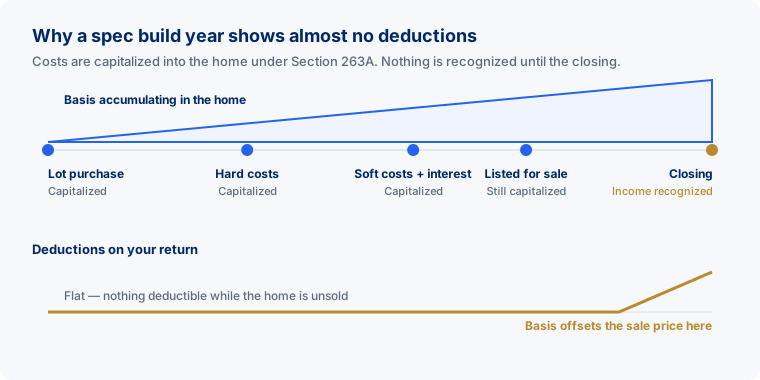
That trips up new builders in a specific and painful way: they spend a year writing checks, deduct what looks like ordinary business expense, and then a CPA correctly capitalizes it — producing a year with almost no deductions followed by a year with a very large gain. Set up right from the start, the same facts produce a smooth, predictable result.
Then there's the part nobody warns you about: dealer status. Homes held for sale in the ordinary course of business are dealer property. That means ordinary income, self-employment tax on the profit, no installment sale reporting, and no 1031 exchange. If you also hold rentals, those activities have to be structured and documented so the rental side isn't swept in with the building side.
- Per-home inventory cost accounting
- Section 263A UNICAP cost capitalization
- Construction loan interest capitalization
- Subdivision common cost allocation across lots
- Dealer vs. investor classification and structuring
- Gain recognition timing at closing
- Separating rental holdings from build inventory
- Draw schedule and lender reporting
Accounting Built Around the Closing Table
Per-Home Cost Tracking
Every home carries its own cost ledger from lot acquisition through closing — hard costs, soft costs, allocated common costs, and capitalized interest. At closing you know the actual gross margin on that house, not a guess from the bank statement.
UNICAP Compliance
Section 263A capitalization done deliberately: which indirect costs get allocated, on what basis, and whether you still qualify for the small business exception. Growing builders cross that gross receipts threshold quietly, and the catch-up is unpleasant.
Interest Capitalization
Construction loan interest allocable to the production period is capitalized, not deducted. We track production period start and end dates per home and apply the avoided-cost method so the interest lands in basis where it belongs.
Lot & Subdivision Costing
Streets, utilities, drainage, engineering, and entry features allocated across benefited lots so every closing reports the right gain. Done poorly, this distorts margin on every home in the neighborhood — usually in the wrong direction.
Dealer Status Planning
Ordinary income and self-employment tax on build profit is the cost of doing business. Losing capital gain treatment on a property you actually intended to hold is not. We structure and document the two activities separately.
Statements for Lenders
Construction lenders and private capital want financial statements showing inventory, debt, and equity clearly. We prepare compiled and reviewed statements with a peer review rating of pass behind them.
Spec Build vs. Contract Build
Many builders do both in the same year. The books have to handle both correctly — the rules genuinely differ.
Spec home (built for your own account)
- Treated as inventory — property held for sale
- Costs capitalized under Section 263A until sale
- Interest capitalized during the production period
- All income recognized at closing
- Ordinary income; generally self-employment tax applies
- No installment sale reporting for dealer property
- No Section 1031 exchange treatment
Contract build (owner signs first)
- Long-term contract rules under Section 460
- Percentage-of-completion, or an available exception
- Home construction contract exception may apply
- Income recognized as the contract progresses
- Retainage timing becomes a planning issue
- WIP schedule drives bonding and lender review
- See our contractor page
Spec Builder Questions
Is a spec home taxed the same way as a contract build?
No, and this is the single most important distinction in homebuilder accounting. A contract build is a long-term contract governed by Section 460. A spec home built for your own account before a buyer exists is inventory — property held for sale. Costs are capitalized into the home and nothing is recognized until it sells. Builders who do both need two sets of rules running side by side in the same books, which is exactly where most off-the-shelf bookkeeping falls apart.
What is UNICAP and does it apply to me?
Section 263A — the uniform capitalization rules — requires producers to capitalize direct costs and an allocable share of indirect costs into the property they produce rather than deducting them currently. For a spec builder that means land, hard costs, permits, architecture and engineering, and a portion of indirect costs get capitalized into each home. There's a small business exception based on average annual gross receipts, but many growing builders cross that threshold without noticing, and the correction is a method change, not a simple adjustment.
Do I have to capitalize construction loan interest?
Often yes. Section 263A(f) requires interest allocable to the production period of designated property to be capitalized rather than deducted. For a builder carrying several homes on an interest reserve, this is a meaningful timing difference, and getting the production period start and end dates right for each home matters more than builders expect.
Why does dealer status matter so much?
A builder who holds homes primarily for sale to customers in the ordinary course of business is a dealer. Dealer property produces ordinary income rather than capital gain, is generally ineligible for installment sale reporting and for Section 1031 like-kind exchange treatment, and the profit is typically subject to self-employment tax. None of that is avoidable for your build business — but if you also intend to hold properties as long-term rentals, those need to be acquired, titled, and documented in a way that keeps them out of dealer inventory.
How should I allocate the cost of a subdivision across lots?
Common development costs — streets, utilities, drainage, engineering, entry features — have to be allocated across the lots benefited so each home carries its fair share of basis when it sells. Allocation is commonly done by relative fair market value or by lot count depending on the facts. Get it wrong and the gain is distorted on every closing in the subdivision, usually overstating income on the first homes sold.
I had a year with huge spending and almost no deductions. Did my CPA make a mistake?
Probably not — that's what correct capitalization looks like when you're building inventory that hasn't closed yet. The deductions aren't gone; they're sitting in basis and will offset the sale price when the home sells. What it does mean is that your estimated tax payments and cash planning need to follow the closing calendar, not the spending calendar. That's a planning problem, and it's solvable if we're looking at it before year-end.
From Our Blog
Why Your Build Year Showed Almost No Deductions
Section 263A capitalization, the small business exception, and how to avoid the whipsaw when three homes close in the same year.
Read the article →Dealer Status: Why Builders Can't 1031 a Spec Home
Ordinary income, self-employment tax, and no like-kind exchange — plus how to keep the properties you intend to hold out of inventory.
Read the article →Building Specs and Not Sure the Books Are Right?
Bring us one closed home and one in progress. We'll walk through how the costs were captured, what should have been capitalized, and what the closing actually earned you.
Related: Rental property owners · Financial statements for lenders