CPA for Truckers & Owner-Operators
Per diem claimed at the DOT rate, Form 2290 and IFTA handled on schedule, tractors and trailers depreciated properly, and an honest answer on whether that lease-purchase is actually a lease.
Cost Per Mile Is the Only Number That Matters
Owner-operators get told a lot of things at truck stops, and a meaningful share of it is wrong. That the settlement statement is your income. That you can write off the whole truck the year you buy it, always. That a lease-purchase is a lease. That per diem applies whether or not you're away overnight. Each of those beliefs has cost drivers we've met real money, either in overpaid tax or in a notice two years later.
The fundamentals are simple enough once someone sets them up. Settlement statements get broken into gross revenue and the deductions the carrier took, so you see actual revenue rather than a net check. Fixed and variable costs get separated so cost per mile is a number you can bid against. Per diem gets claimed at the 80% DOT rate with a days-on-the-road log behind it. And the 2290 gets filed before it stops your registration.
From there we can answer the questions that actually change your income: when to buy versus when to wait, whether an S-corp election pays yet, and how to keep quarterly estimates lined up with freight rates that don't hold still.
- Owner-operator Schedule C and entity returns
- DOT per diem at 80% with proper substantiation
- Form 2290 heavy vehicle use tax
- IFTA quarterly fuel tax reporting
- Tractor, trailer, and APU depreciation
- Lease vs. conditional sale analysis
- Cost-per-mile reporting
- Quarterly estimates built for variable freight
From One Truck to a Small Fleet
Per Diem Done Right
The DOT special rule allows 80% of meal costs rather than 50%, and the transportation industry per diem rate removes the need to keep meal receipts. What it does require is proof you were away from your tax home overnight — so we set up a simple day log that holds up.
2290 & IFTA
Heavy vehicle use tax filed on time so your stamped Schedule 1 is ready at registration, and IFTA quarterly returns reconciled to your fuel and mileage records instead of assembled from memory the week they're due.
Equipment Depreciation
Tractors, trailers, APUs, and in-cab equipment placed on the right recovery periods, with Section 179 and bonus depreciation timed against strong years rather than burned in a year when the deduction had nothing to offset.
Lease-Purchase Review
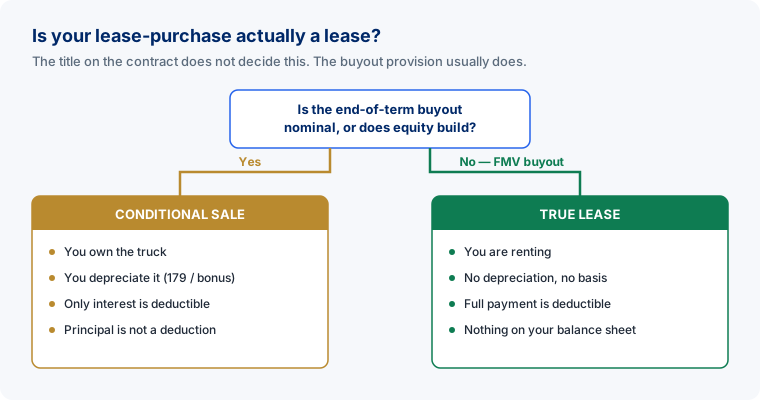
We read the agreement before filing. A true lease means deductible payments; a conditional sale means you own the truck, depreciate it, and deduct only the interest. Getting this backwards for three years is expensive to unwind.
Cost Per Mile
Fixed costs — truck payment, insurance, permits — separated from variable costs like fuel, tires, and maintenance, so you know the rate below which a load loses money. Most drivers who quote a cost per mile are quoting fuel plus a guess.
Estimates & Cash Flow
Freight rates move; quarterly estimates built on last year's numbers don't. We use safe-harbor rules and actual settlement data so you're not funding a tax bill out of a slow quarter.
Four Things Drivers Get Told That Aren't True
"Your settlement check is your income"
It isn't. The carrier deducted fuel advances, insurance, escrow, and trailer rent before cutting it. Gross revenue and every deduction belong on the return separately — netting them understates revenue and buries deductions you're entitled to.
"Write off the whole truck the first year"
Sometimes available, rarely optimal. A large deduction in a low-income year wastes it, and it leaves you with no depreciation left in the years the truck is actually earning. Timing beats maximizing.
"Per diem every day you drive"
The deduction requires being away from your tax home long enough to require sleep or rest. A local driver home every night doesn't qualify, no matter how many hours were logged. Claiming it anyway is one of the more common audit adjustments in this industry.
"Go S-corp as soon as you get your authority"
Too early and the payroll cost, unemployment tax, and compliance overhead exceed the self-employment tax saved — and per diem gets harder, not easier, because you now need an accountable reimbursement plan. It's a numbers question with a real threshold.
Trucking Tax Questions
How does the per diem deduction work for truckers?
Drivers subject to DOT hours-of-service limits may deduct meal expenses at 80% rather than the 50% that applies to most taxpayers, and may use a special transportation industry per diem rate instead of keeping meal receipts. The deduction requires being away from your tax home long enough to need sleep or rest — so it generally applies to over-the-road drivers, not to local drivers home each night. A simple log of days on the road is the support that makes it stick.
Can a company driver deduct per diem?
Generally no. Unreimbursed employee business expenses aren't deductible for federal income tax under current law, so a W-2 company driver can't deduct meals, gear, or truck expenses the way drivers could before 2018. An accountable per diem reimbursement plan run by the carrier is how that benefit reaches a company driver now — which is worth asking your carrier about. Owner-operators filing Schedule C or through an entity are in a completely different position.
What is Form 2290 and when is it due?
Form 2290 reports the federal heavy vehicle use tax on trucks with a taxable gross weight of 55,000 pounds or more. The tax period runs July 1 through June 30, and for vehicles in use at the start of the period the return is generally due by August 31. You need the stamped Schedule 1 to register or renew plates — so a missed filing stops the truck, not just the tax return.
Is my lease-purchase really a lease?
Often not, for tax purposes. If the agreement is structured so you build equity and the final payment is nominal, it may be treated as a conditional sale rather than a true lease. That changes everything: a true lease produces deductible lease payments, while a conditional sale means you own the truck, you depreciate it, and only the interest portion of the payment is deductible. We read the contract before the first return is filed — unwinding three years of the wrong treatment costs far more than reading it did.
Should an owner-operator be an S-corp?
Sometimes, and usually later than people are told. Self-employment tax savings only begin once profit meaningfully exceeds a reasonable salary for a driver, and an S-corp brings payroll filings, unemployment tax, and added compliance cost. It also complicates per diem, since an employee-shareholder needs an accountable reimbursement plan rather than a Schedule C deduction. Run the S-corp calculator for a first pass, then let's look at your settlements.
What records do I actually need to keep?
Settlement statements, fuel receipts and IFTA mileage by state, maintenance and repair invoices, the truck purchase or lease agreement, insurance and permit costs, and a log of nights away from home for per diem. That's it — but it needs to be all of it, all year. The single biggest cost we see isn't a missed rule; it's a driver reconstructing a year of records in March and giving up on the ones that are gone.
From Our Blog
Who Actually Qualifies for the 80% DOT Per Diem
The overnight requirement, partial days, why company drivers can't claim it, and what records hold up on examination.
Read the article →Is Your Lease-Purchase Actually a Lease?
A nominal buyout usually means conditional sale — you own the truck, you depreciate it, and only the interest is deductible.
Read the article →